

66th Ave. & Portland Ave.
Richfield, MN
-
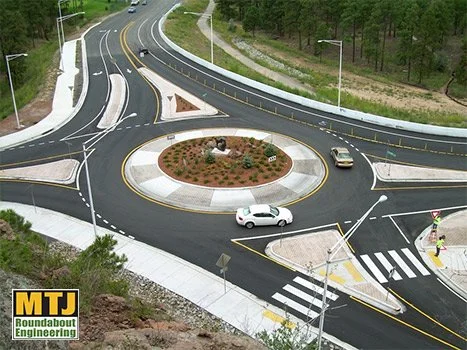
Background
The City of Richfield, MN, retained MTJ Roundabout Engineering to provide recommendations to improve driver comprehension to reduce specific crash types – primarily aimed at incorrect lane use. The results were an 80% reduction in lane-discipline issues (left turn from outside lane), and a 20% reduction in lane changes at entrance and exits. The University of Minnesota Traffic Observatory studied the results of these changes, and this work effort included an advisory oversight committee consisting of MNDOT, County, and Consulting Engineers.
-
SUMMARY
We quickly recognized several discrepancies between the initial signing and marking design and the implementation seen on the site. MTJ consulted with the city and recommended changes to better guide drivers and pedestrians through the intersection. The video on this page shows peak flows (4:30 – 5:30 pm) after these signing and marking changes were made. Issues:
-Lane discipline issues – outside lane incorrectly circulating, causing a crash with inside lane exiting vehicles, ~ 45%
-Failure-to-yield crashes ~ 45%
The MTJ corrective re-design re-stored the safety, capacity, and operational requirements for this busy, heavily used roundabout that also serves as a crossing point for a regional multi-modal pathway. Key to this effort was developing an exceptional design within the severe constraints imposed by the steep grades and existing roadway alignments.
Results: 80% reduction in lane-discipline issues (left turn from outside lane)—20% reduction in lane changes at entrance and exits.
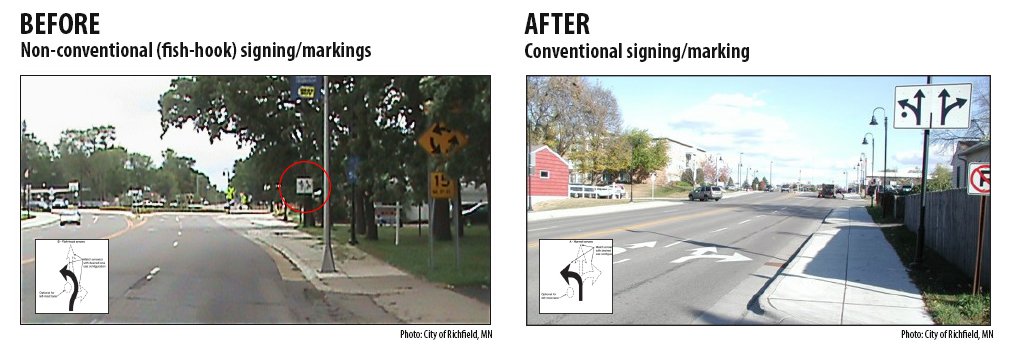
Pavement Markings
Circulating pavement markings were changed to a consistent segment and gap line type to enhance lane discipline and positive driver guidance and improve safety performance.
Solid white channelization lane line extended (250ʹ) from yield line, lane line 10ʹ skip and 10ʹ gap (150ʹ).
Circulatory markings from solid lines and skips through the exit and replaced with 6″ white “consistent/strong” 6ʹ line, 3ʹ gap.
All existing curvilinear lane-use signs and pavement markings were replaced with standard lane-use configurations and moved further back to allow multiple installations to give drivers more time for decision-making before reaching their entry point.
Signage
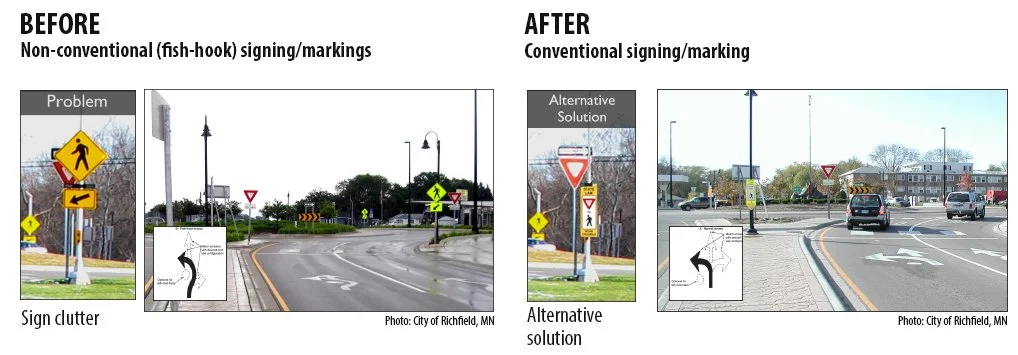
The “pedestrian crosswalk warning” sign (W11-2) was exchanged for the thinner, brighter “yield to pedestrians in crosswalk” sign (R1-6) with a lowered placement height (to driver eye level), making the sign more visible to drivers and increasing visibility of the yield sign beyond the crosswalk that was partially blocked by the previous sign.
Change from “fish-hook” to standard style lane use signing (oversized) and markings. (The assumption behind the original implementation of the “fish-hook” sign was that it would help prevent wrong-way left turns. It is important to note that following the change to standard style, there was no evidence of increased violations of this type.) Added additional sets further upstream of the roundabout entrance.
The assumption behind the original implementation of the “fish-hook” sign was that it would help prevent wrong-way left turns. Therefore, it is important to note that following the change to standard style, there was no evidence of increased violations of this type.
MTJ recommended several other modifications to improve visibility, accentuate important driver recognition and lane discipline, and optimize driver instruction.
Highlights
Provided analysis and design recommendations to support the multi-modal road diet, bikeway and rapid transit conversion project
Provided in-service analysis that included calibration, sensitivity testing and a tiered approach to meet project objectives
Balanced the operational effects resulting from the removal of the bus bays with the planned bus rapid transit operations